Backpack Canva Template: Graphics for Real Brand Projects
As a graphic designer who’s built brand identities for handmade businesses, Etsy shops, and local product launches over the past 12 years, I approach every design asset with one question: Does this elevate the client’s story—or just fill space? When I opened the Backpack Canva Template for review, I was evaluating it not as a standalone decoration, but as a working piece of visual infrastructure—for a real project I’m currently developing: a summer-themed boutique backpack line for a small business that sells eco-conscious accessories to Gen Z and millennial parents.
A First Impression That Sets the Tone
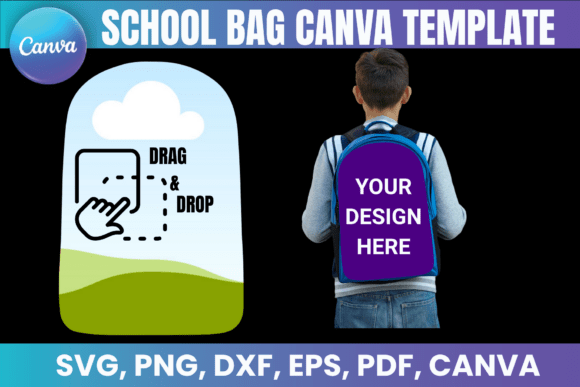
The Backpack Canva Template arrives as a cohesive set—17 distinct backpack layouts, each rendered in clean vector-style outlines or layered PNGs with transparent backgrounds. It doesn’t scream “trendy” or “retro.” Instead, it offers quiet confidence: soft curves, balanced proportions, subtle strap detailing, and consistent perspective across all frames. This isn’t clipart—it reads like a graphic design asset built for intentionality. The mood is approachable, craft-forward, and quietly modern—ideal for brands rooted in authenticity, sustainability, or artisanal storytelling.
Where It Shines in Client Work
In my current project, the Backpack Canva Template functions as both structural anchor and emotional connector. We’re using the Backpack Canva Frame as the foundation for product mockups—not just static images, but scroll-stopping hero graphics for Instagram posts and Pinterest pins. Its clean silhouette holds typography beautifully, letting our custom serif logo sit confidently above the zippers without visual competition.
It also excels in packaging design: we’ve dropped the Shoulder Bag Sublimation variant into a die-cut label layout, scaled to fit a recycled kraft tag. Because the template includes multiple angle options—including front-facing, 3/4 view, and side-profile—the same asset supports consistency across web banners, email headers, and printable hang tags. For print-on-demand partners, the Backpack Sublimation Template delivers crisp edge-to-edge alignment on polyester fabric—no pixelation, no distortion at 300 DPI.
As a creative design tool, it bridges digital and physical workflows seamlessly. I’ve used it inside Canva for rapid social media graphics, exported SVG versions for Cricut projects (perfect for vinyl-cutting custom patches), and layered PNGs into editorial spreads for a seasonal lookbook. Its versatility makes it more than a digital product—it’s a flexible node in a broader design bundle.
Smart Applications Across Design Disciplines
- Brand identity: Serves as a recurring motif in patterned backgrounds, icon systems, and branded stationery—especially when paired with hand-drawn textures or muted palettes.
- Marketing visuals: Anchors carousel ads by providing instant context; viewers immediately understand the product category without reading a caption.
- Printable design: Works flawlessly in A5 planner inserts, sticker sheets, and downloadable wall art—thanks to scalable vector options and clear negative space.
- Etsy product presentation: Enhances perceived value by replacing generic stock mockups with purpose-built, on-brand framing.
- Web design: Used as SVG icons in navigation bars or as animated hover elements—lightweight, editable, and accessible.
Where Caution Is Required
This isn’t a universal solution. The Backpack Canva Template loses clarity below 120px width—so avoid it in favicon-sized contexts or dense mobile menus. On busy backgrounds (e.g., grainy photos or gradient overlays), its mid-contrast outlines can visually recede unless you add subtle drop shadows or solid backing shapes.
It’s also less effective for minimalist branding or corporate B2B work. If your client’s voice is clinical, technical, or ultra-refined—think law firms or SaaS dashboards—the warmth and organic shape of the template may clash with expectations of austerity and precision.
Designer Notes You Can’t Skip
- Always test the Backpack Canva Template in black and white—some variants rely on color contrast for readability, which disappears in grayscale print.
- Preview on both light and dark UI modes—transparency behavior changes drastically in dark mode apps and CMS previews.
- Place it on real-world mockups (not just Canva’s built-in ones) to assess how strap thickness and pocket depth translate to physical products.
- Check file formats: Confirm whether SVG files are truly editable paths (not rasterized exports) and whether PNGs include alpha transparency—not just white backgrounds.
- Test typography pairings: It pairs strongly with friendly sans serifs (like Poppins or Inter) and warm display fonts—but clashes with sharp geometric sans serifs or formal serifs unless carefully spaced.
- Verify commercial licensing: While marketed for sublimation and POD use, confirm whether the license covers resale of derivative works—critical for small business branding clients.
Final Verdict: A Thoughtful Asset, Not a Shortcut
The Backpack Canva Template doesn’t replace strategy—it amplifies it. In my boutique backpack project, it helped unify messaging across eight touchpoints in under three days: from Instagram Reels thumbnails to printable thank-you cards. That speed came not from laziness, but from having a reliable, stylistically coherent creative marketplace asset that matched our visual hierarchy goals.
It strengthens visual hierarchy by giving the eye an immediate, recognizable anchor—especially valuable when designing for audiences scrolling quickly. It builds brand consistency without demanding rigid repetition; the 17 variants allow gentle evolution across seasons or collections. And because it’s built for real production workflows—not just decoration—it contributes to visual trust. Customers don’t just see a backpack—they see craftsmanship, attention to detail, and intention behind every pixel.
For designers building for handmade businesses, print-on-demand sellers, Cricut users, bloggers launching merch lines, or marketers supporting local events—this is more than a sublimation design. It’s a quietly powerful commercial design partner. Just remember: even the best graphic design asset only works when paired with thoughtful application, thorough testing, and respect for the client’s unique voice.