Nautical Canva Frame Templates
First Impressions: Clean, Coastal, and Ready for Stitching
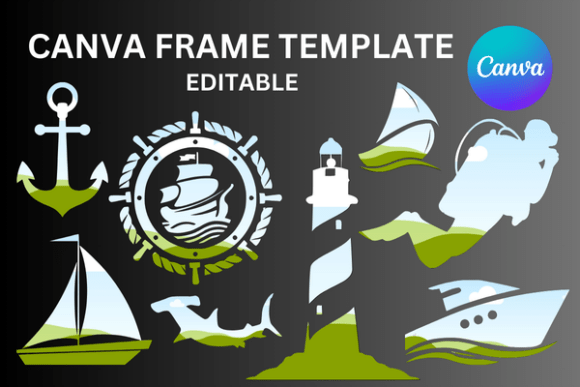
As someone who’s stitched nautical themes on everything from baby onesies to boutique aprons, I opened the Nautical Canva Frame Templates expecting charm—and got clarity. These eight frames aren’t just decorative; they carry a quiet confidence—sleek rope borders, subtle anchor motifs, clean wave lines, and balanced negative space. No overwrought scrollwork or cluttered corners. That matters. When you’re planning an embroidered tote bag for a coastal gift shop or a personalized sweatshirt for a seaside wedding, simplicity reads as intention—not compromise.
A Real Project Test: Embroidering a Linen Tea Towel for a Local Café
I used one of the frames—specifically the minimalist rope-circle variant—as a border for a custom linen tea towel. The café wanted something nautical but refined, not kitschy. I placed the frame around a small monogrammed “S” (for their owner’s name) and ran it as a machine embroidery design using satin stitch for the outer rope and soft fill stitch for the inner band. On smooth, medium-weight linen with tear-away stabilizer? Crisp. Balanced. Professional. Customers noticed it—not as “cute,” but as *thoughtful*. That’s the difference between decoration and design.
Where These Frames Shine in Real Embroidery Work
- Custom apparel: Works beautifully on crewneck sweatshirts—especially when centered above a chest pocket or framing a small logo patch.
- Tote bag design: The open interior gives breathing room for text or a small icon, avoiding visual crowding on canvas or cotton duck.
- Baby embroidery: Gentle curves and low-detail outlines hold up well on delicate knit onesies—no dense fill areas that risk puckering.
- Embroidered patch: Clean edges translate cleanly to heat-press or sew-on patches, especially when paired with simple lettering or a single anchor icon.
- Holiday embroidery: Swap thread colors to navy/cream for coastal Christmas or aqua/white for summer birthdays—these frames adapt without losing identity.
- Etsy seller & small shop product: They elevate handmade presentation instantly. A framed “Welcome” on a kitchen towel feels curated—not generic.
Use With Care: Fabric, Fit, and Function
These frames are versatile—but not universal. Here’s where attention pays off:
- Small hoop sizes: Most frames fit comfortably in a 4×4 hoop, but the largest variants push close to the edge. Always check your actual hoop size before digitizing or resizing.
- Textured or stretchy fabric: On terry cloth towels or jersey knits, reinforce with cut-away stabilizer. The clean lines won’t forgive shifting.
- Dark fabric: Test thread color contrast first. Light-navy or ecru thread reads softer than stark white—better for heirloom-level baby embroidery.
- Curved surfaces (caps, hats): Avoid frames with tight inner corners—they’ll distort. Stick to the more open, circular versions.
- Frequent-wash items (kitchen towels, baby clothes): Steer clear of ultra-thin running-stitch outlines alone. Pair with at least one layer of satin or fill stitch for durability.
What This Means for Your Craft Business
For Etsy sellers and small shop owners, the Nautical Canva Frame Templates do more than decorate—they signal consistency. Used across a line of nursery decor, beach-themed gifts, or coastal apparel, they build brand recognition without needing a logo. Customers begin to associate that clean rope motif with your shop’s aesthetic. That builds trust. And trust converts: a buyer who recognizes your framing style on a pillow cover is more likely to click through to your embroidered apron listing.
It also saves time. Instead of sketching frames from scratch for every new product, you’ve got eight proven, balanced options—each designed with spacing and rhythm in mind. That means faster mockups, cleaner printable mockup presentations, and smoother client approvals.
Practical Designer Notes Before You Stitch
- Test on scrap fabric first—especially if pairing with applique design or layered text.
- Review stitch density visually in your embroidery software. Look for areas where fill stitch might overwhelm fine rope outlines.
- Confirm licensing before selling finished products or digital embroidery files. Since this is a graphics-based Canva template, clarify commercial use rights directly with the creator.
- Check thread color contrast on both light and dark fabric swatches—not just your screen.
- Inspect corners and curves at 200% zoom. Tiny gaps or overlaps become visible stitch errors.
- Try a black-and-white mockup to assess value contrast—critical for visibility on textured or busy backgrounds.
- Use proper stabilizer matched to your fabric weight and stitch type. Even elegant frames need structural support.
- Ask yourself: Does this frame serve the product—or compete with it? If your embroidered patch already has bold lettering, choose the most open frame variant.
Final Thought: Not Just a Frame—A Foundation
The Nautical Canva Frame Templates don’t shout. They anchor. They frame intention, not just content. In an embroidery project, that restraint is rare—and valuable. Whether you’re stitching a holiday gift for a sailor aunt or building a cohesive collection for your craft business, these frames give structure without stiffness. They leave room for personality, craftsmanship, and the quiet pride of a well-executed handmade product. Just remember: even the best frame needs thoughtful placement, smart stabilization, and honest testing. Do that—and what you present isn’t just nautical. It’s memorable.