Paint Brush Brush Stroke Canva Frame_4
A Designer’s First Look: Loose, Lively, and Made for Handmade Charm
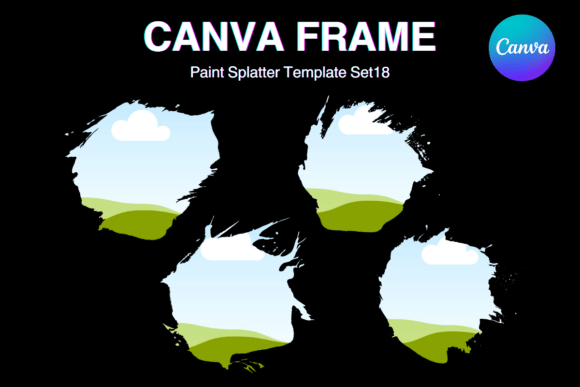
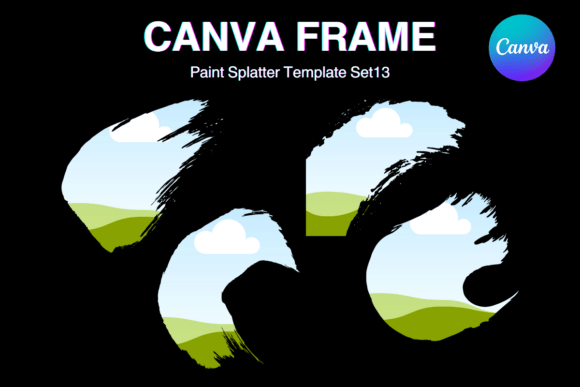
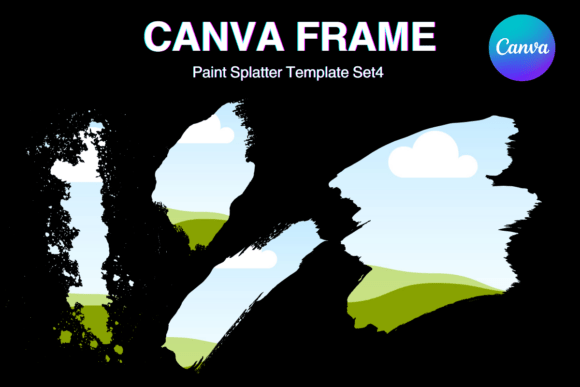
When I opened Paint Brush Brush Stroke Canva Frame_4, I didn’t see a rigid border or a symmetrical layout—I saw movement. Four distinct 12×12 inch frames, each built around expressive, gestural brush strokes that sweep, taper, and lift like real paint on canvas. There’s no clipart stiffness here. The lines have weight, rhythm, and breathing room—exactly what makes a machine embroidery design feel intentional rather than templated. As someone who regularly translates digital graphics into stitched reality, I immediately pictured this on a linen tea towel, a heavyweight cotton tote, or the front panel of an apron for a local artisan bakery.
Where It Shines in Real Embroidery Projects
Paint Brush Brush Stroke Canva Frame_4 isn’t built for tiny lettering or micro-detail—it’s designed to anchor and elevate. I tested it as a framing element around a simple monogram for a custom embroidered baby blanket. The result? Instant warmth and craft-forward personality. No extra embellishment needed. It also worked beautifully as a standalone motif on a sweatshirt pocket—stitched in matte cotton thread with subtle variegation—to give a boutique-level finish without overwhelming the garment.
For Etsy sellers and small shop owners, this is a quiet value-builder. When used as a frame around a client’s name or date on a personalized gift (think nursery wall art, holiday stockings, or wedding kitchen towels), it adds visual hierarchy and handmade authenticity. As a design asset, it bridges digital convenience and tactile appeal—especially when paired with soft fill stitches or open satin outlines that let fabric texture peek through.
Fabric & Fit: Know Where to Lean In—and Where to Pause
This isn’t a one-size-fits-all embroidery file. Its expressive strokes rely on clean line definition and confident spacing. On thin or highly textured fabrics—like lightweight rayon challis or heavily napped fleece—the finer tapered ends can blur or get lost. I’d avoid it on stretchy knits unless stabilized aggressively and hooped with care. Dark fabric backgrounds work well, but only if thread contrast is intentional: charcoal gray thread on navy denim reads rich and grounded; pastel thread on black may vanish unless you boost stitch density slightly.
Caps and curved surfaces are trickier. The longer, sweeping strokes don’t wrap easily over domed areas without distortion—so I’d reserve Paint Brush Brush Stroke Canva Frame_4 for flat or gently contoured zones: tote bag fronts, pillow covers, apron bibs, or tea towel hems. For patches, it holds up beautifully at 3–4 inches wide—but shrink it below 2.5 inches, and the delicate terminations start to collapse in stitch execution.
What It Adds to Your Finished Product—Beyond Aesthetics
Customers don’t just buy embroidery—they buy intention. Paint Brush Brush Stroke Canva Frame_4 signals thoughtfulness. It says “this wasn’t slapped on; it was composed.” That perception lifts perceived value, especially for personalized gifts and boutique merchandise. On an embroidered kitchen towel sold in a local craft fair, it made the item feel curated—not mass-produced. On a custom sweatshirt for a small pottery studio, it reinforced brand voice: organic, skilled, quietly confident.
It also supports consistency across product lines. Use one frame variant for baby items (soft curves, gentle scale), another for holiday gifts (bolder stroke weight, higher contrast), and a third for apparel branding (tighter spacing, cleaner edges). Because these are Canva-based graphics—not vector files or native embroidery formats—you’ll need to convert them properly before digitizing, but their high-res 3600×3600 pixel clarity gives plenty of room for clean tracing and stitch mapping.
Practical Notes Every Embroidery Designer Should Keep Handy
- Always test on scrap fabric first—especially with your target stabilizer combo. These strokes read differently on tear-away vs. cut-away, and thread tension shifts can exaggerate or mute taper.
- Check thread color contrast early. What reads as elegant on screen may disappear on dark fabric. Try black-and-white mockups to assess value separation.
- Review stitch density in the thickest stroke sections. Overly dense fills can cause puckering on lightweight cottons or stiffening on baby-soft knits.
- Confirm hoop size compatibility. At full 12×12 inch scale, you’ll need a large-format hoop—or plan to split and reassemble carefully.
- Inspect corners and endpoints. Even in high-res graphics, sharp turns can translate to skipped stitches or thread breaks if not smoothed in digitizing software.
- Verify licensing before selling finished items. Since Paint Brush Brush Stroke Canva Frame_4 is delivered as a PDF with Canva links—not a native embroidery file—confirm whether commercial use includes resale of physical embroidered goods or only digital mockups.
A Final Thought for Craft Businesses and Creative Entrepreneurs
If you’re choosing between dozens of “artistic” frames for your next batch of embroidered totes, baby onesies, or holiday gifts—Paint Brush Brush Stroke Canva Frame_4 stands out because it doesn’t shout. It invites. Its looseness leaves space for your craftsmanship to breathe, your thread choices to sing, and your customer’s story to land clearly inside the frame—not compete with it. It’s not flashy. It’s focused. And in handmade markets, that kind of quiet confidence is exactly what builds trust, repeat buyers, and word-of-mouth referrals.